
Pegasus Equestrian International: A Paradigm Shift in Equestrian Resort Development
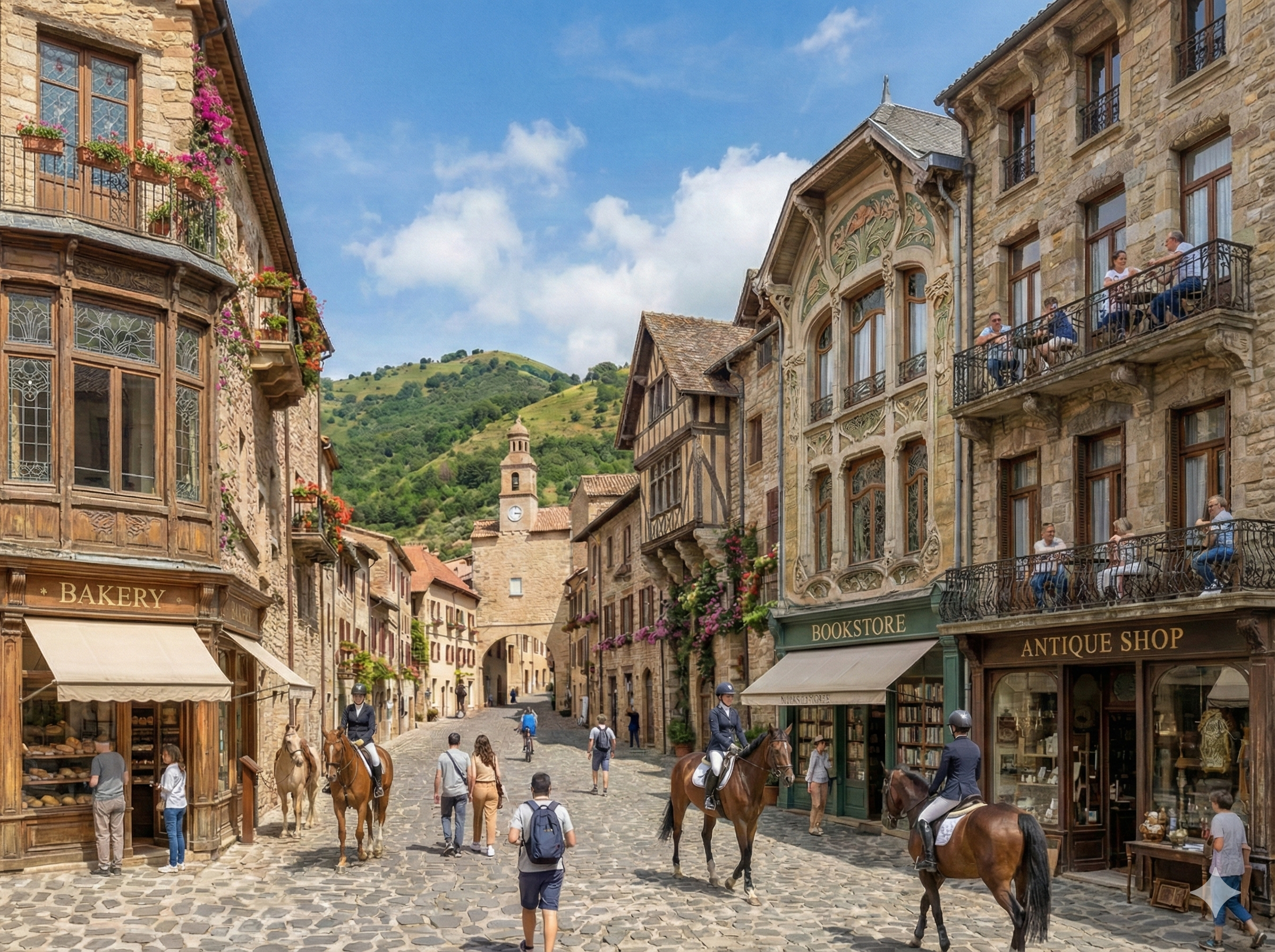
Village of Stirling at Pegasus Conceptual Design (Pegasus Equestrian International / Gemini 2026)
Also posted on LinkedIn here.
Executive Summary
In the high-stakes world of equestrian and winter sports real estate, a rather absurd paradox has emerged: the very developments built to celebrate a lifestyle are actively destroying it. From the humid swamps of Florida to the corporatized ski slopes of Colorado, the traditional developer playbook—selling off the land or squeezing the athletes with exorbitant access fees—is triggering a massive gentrification cycle that pushes out the core participants.
Enter Pegasus Equestrian Resort, a nearly 3,000-acre destination resort located in Douglas County, Oregon. While premier venues traditionally subdivide and sell land to fund operations, Pegasus is executing an unconventional "Keep and Rent" strategy. By retaining 100% of its residential footprint, operating short-term equestrian rentals (VRBOs), and controlling all ancillary revenue streams (lodging, dining, retail), Pegasus achieves a brilliant superfecta. It generates superior long-term financial returns, adheres to Oregon's rigorous agricultural preservation laws, fulfills vital social goals of bringing local year-round jobs without inflating local housing, and structurally subsidizes the sport to keep competition costs accessible—avoiding the "price-gouging" trap currently suffocating companies like Vail Resort
1. The Turf Wars: Coastal Chaos vs. The Gentrification Crisis
Historically, Florida's vibrant equestrian scenes in Miami and West Palm Beach were swallowed whole by urbanization. Today, history is repeating itself in modern hubs, where the "equestrian lifestyle" gentrifies the very land needed for the sport.
Florida: Paving Over the Pastures
Wellington’s Civil War: In Wellington, the fight over open space has reached a boiling point. Developers recently failed in their attempt to pave over the 79-acre Isla Carroll polo fields for a non-equestrian luxury country club. Meanwhile, expansion plans for the showgrounds are effectively being held hostage by developers trying to pull 96 acres out of the highly protected Equestrian Preserve Area to build a golf community.
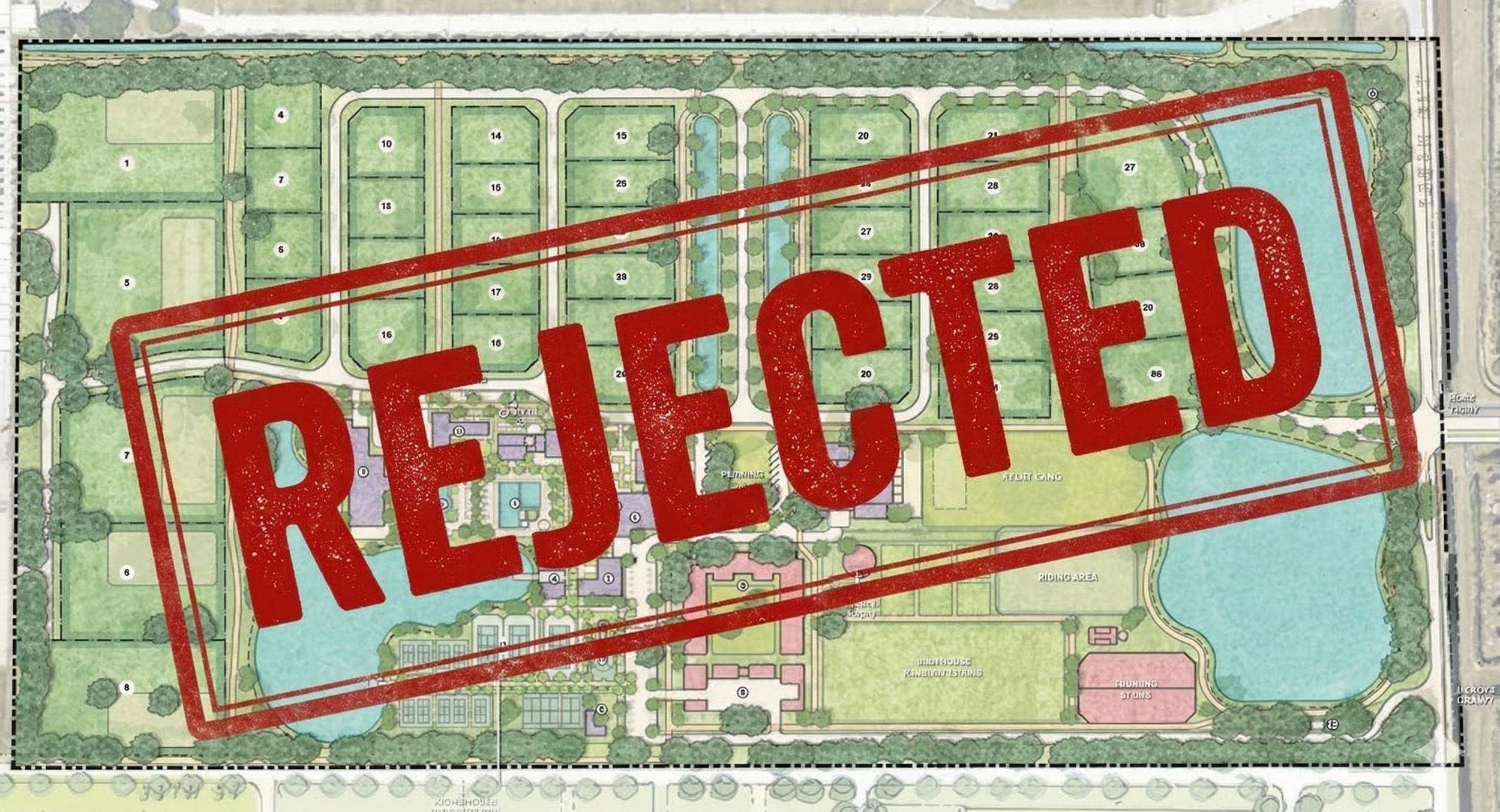
Wellington Isla Carroll Development Plans
Ocala’s "WEC Effect": Since the World Equestrian Center (WEC) was built, local farm prices have skyrocketed. When WEC's owners purchased the historic 1,000-acre Jockey Club 25 minutes away in Reddick, the local community revolted. Facing intense backlash and lawsuits from neighboring landowners, developers were forced to ditch the planned hotel, increase minimum lot sizes, and ban music festivals just to settle the litigation.
The TerraNova Warning Sign: TerraNova Equestrian Center opened in 2022, setting aside 250 acres for equestrian use and 750 acres for large-lot residential development. Yet, they have only sold 7 of their 123 lots. Now, the owners are fighting to reduce Florida's agricultural zoning minimums from 5 acres down to 2 acres. Allowing agricultural land to be subdivided into 2-to-5-acre "ranchettes" doesn't preserve farming; it fragments the land into residential yards, making large-scale equestrian venues impossible to sustain.
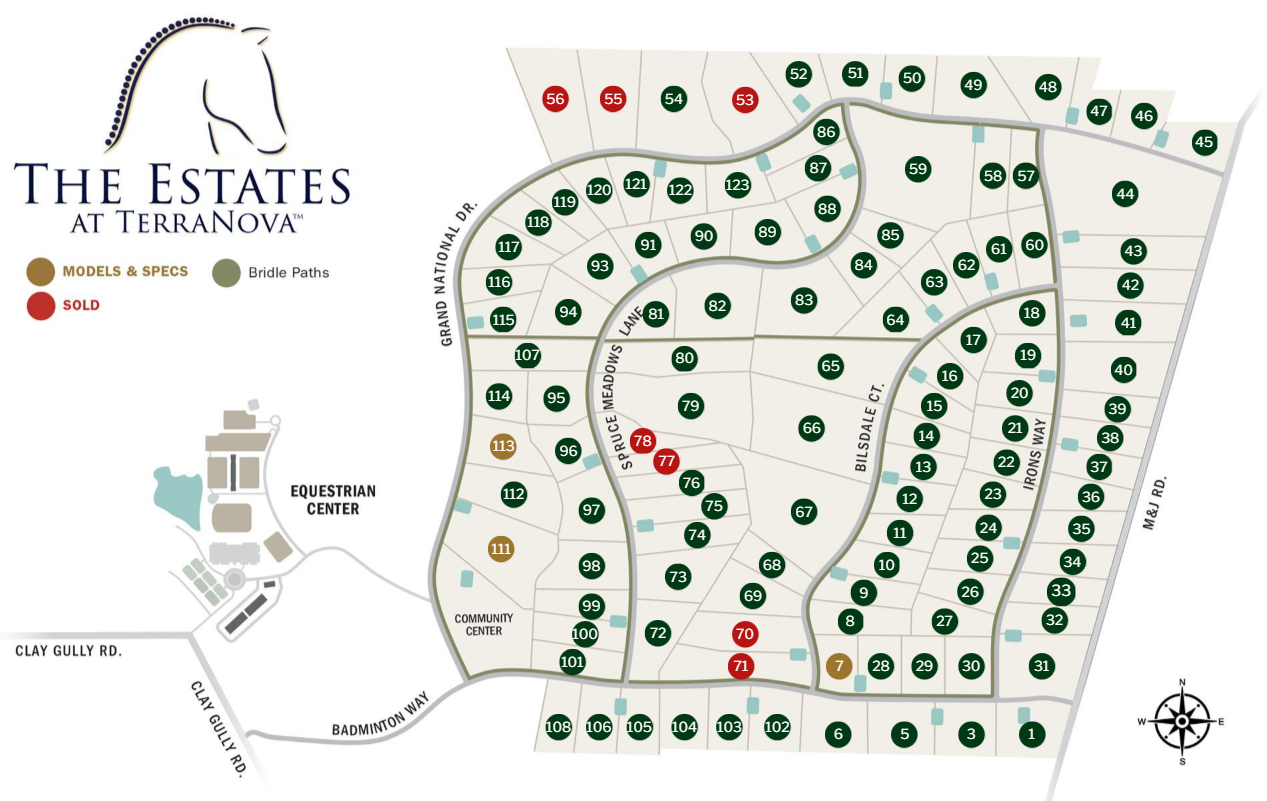
The Estates at TerraNova Development Plans
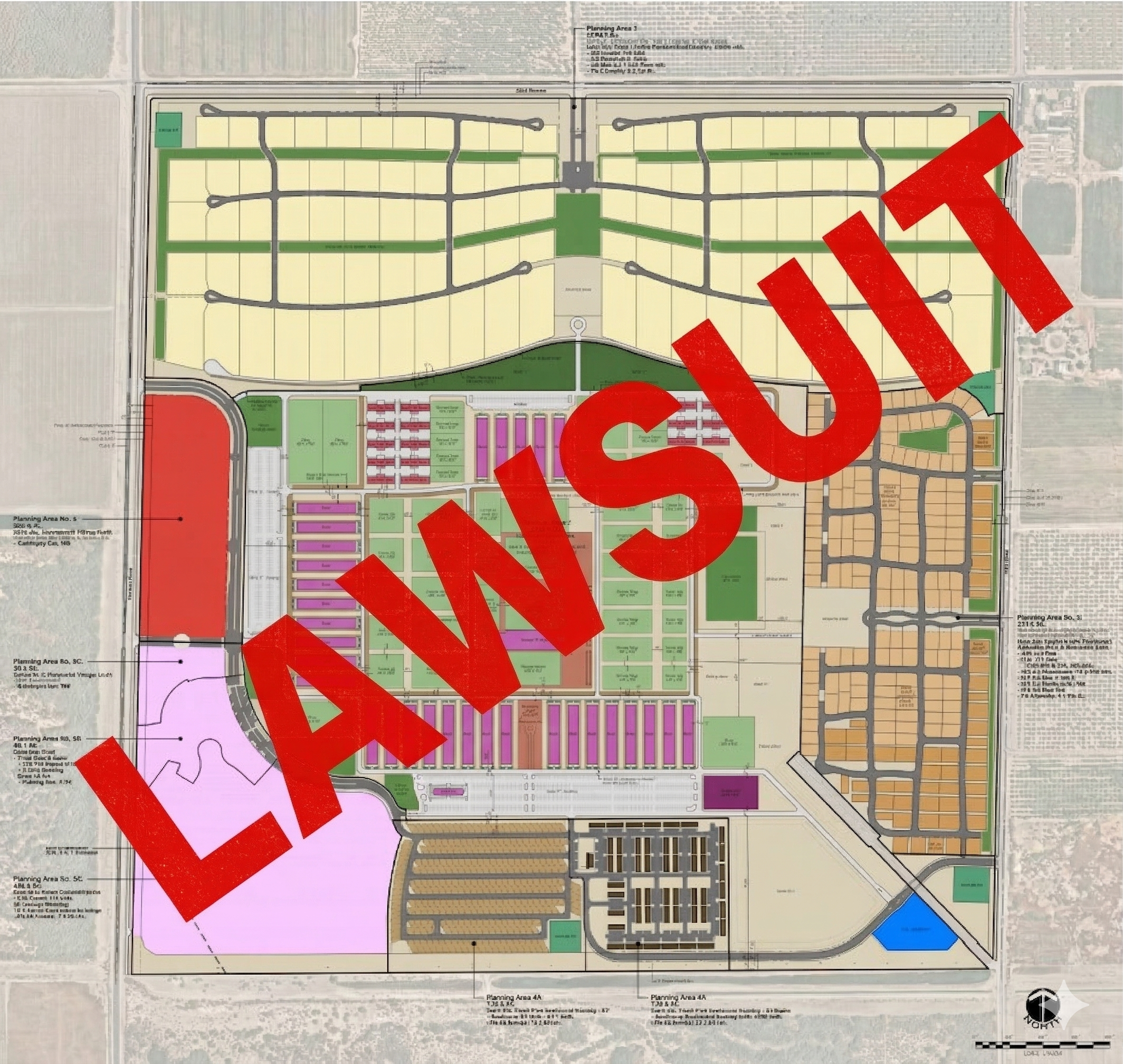
California - The Red-Tape Desert: At the Desert International Horsepark in Thermal, developers are attempting to build "Thermal Ranch"—surrounding the venue with custom estate homes and a hotel. The project was immediately hit with activist lawsuits over environmental impacts. In California, you can apply for zoning changes, but the cost of surviving the gauntlet of Environmental Impact Reports drains the capital needed to actually support the sport.
2. The Oregon Antidote: Ironclad Land Use and Tax Protection
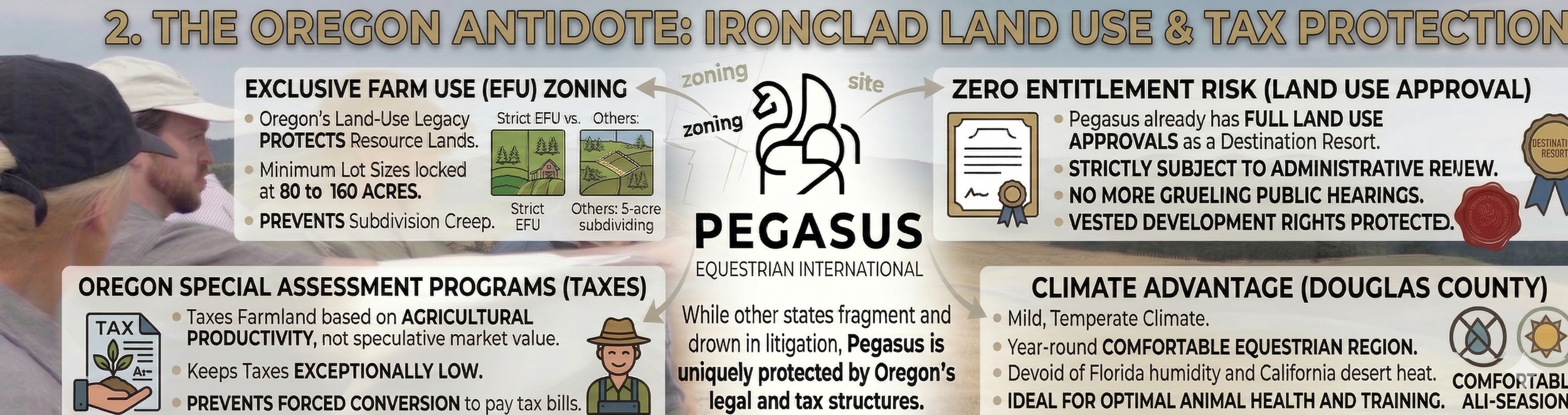
While Florida fragments its farms and California drowns in lawsuits, Pegasus completely bypasses the chaos thanks to Oregon's unique legal and tax structures.
Exclusive Farm Use (EFU): Oregon’s land-use legacy strictly protects resource lands. Pegasus is surrounded by EFU zones with minimum lot sizes locked at 80 to 160 acres, preventing the 5-acre subdivision creep destroying Florida's ecosystem.
Oregon Special Assessment Programs: In other states, skyrocketing land values result in crushing property taxes that force equestrians to sell. Oregon uses Special Assessment Programs that tax farmland and forestland based on its agricultural productivity, not its speculative market value. This keeps taxes exceptionally low, ensuring farmers and equestrians are never forced to convert their land to other uses just to pay the tax bill.
Zero Entitlement Risk: Pegasus already has full land-use approvals as a Destination Resort. There are no more grueling public hearings; the project is strictly subject to administrative review.
The Climate Advantage: Douglas County features a mild, temperate climate devoid of Florida's oppressive humidity and California's blistering desert heat, allowing for year-round, comfortable equestrian operations.
3. The Pegasus Master Plan: A Comprehensive Ecosystem
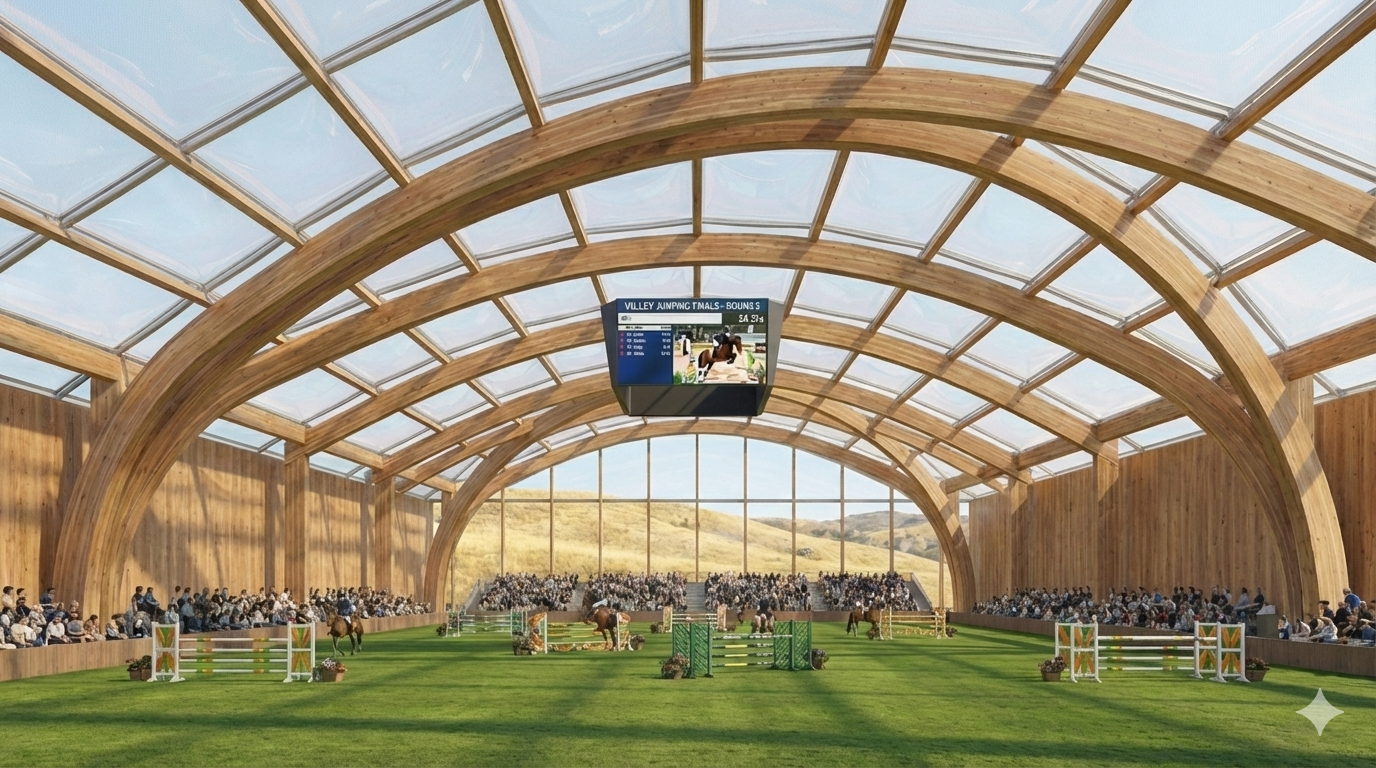
The "Jewel" of Oregon Arena Conceptual Design (Pegasus Equestrian International / Gemini 2026)
Pegasus is a fully integrated, world-class destination. The nearly 3,000-acre master plan includes:
Elite Competition Venues: Multiple indoor climate-controlled arenas, outdoor sand and grass Grand Prix arenas, 4 grass polo fields, a racing flat track, and 224 acres for different levels of cross-country course, a separate combined driving course, a country steeplechase and every other equestrian sport all on one site.
A 250-Acre Luxury Resort & Village: A separate 150-room five-star hotel, spa, convention center, retail, high-end restaurant and employee housing seamlessly integrated into the landscape. On top of this, additional acreage is designated to accommodate VRBO’s (Vacation rentals) and recreational vehicle sites for competitors.
Retail Equestrian Experience Center: Taking advantage of the I-5 interchange, this commercial space will feature visitor ticketing, a distillery/winery, and equestrian-themed retail.
Veterinary Clinic & Equine Welfare: A 39-acre dedicated large-animal veterinary clinic, paired with a comprehensive retirement and retraining hub for horses and equestrians.
4. Social Goals: Uplifting Douglas County Without Pricing Out Locals
The Pegasus model is deeply rooted in social and economic stewardship, specifically tailored to the realities of Douglas County, Oregon.
Research indicates that Douglas County is growing much slower than the rest of the state. Over the last decade, the county's population grew by just 4.3%, compared to Oregon's overall 10.5% growth, and recent estimates show the population effectively plateauing or slightly declining due to an aging demographic. Furthermore, the median household income in Douglas County is around $61,310—roughly two-thirds of the Oregon state median of $85,220.
The region's foundational timber industry is not dead, but it is undergoing a major transition. For instance, Roseburg Forest Products recently closed its legacy hardwood plywood mill in Dillard. However, the company is actively pivoting to more lucrative engineered wood products, recently restarting construction on a state-of-the-art $700 million Medium Density Fiberboard (MDF) plant that will eventually bring over 140 jobs to the area. Still, rural communities feel the pinch of economic shifts; nearby Drain, Oregon, recently suffered the loss of essential services like Ray's Food Place and its local U.S. Bank branch.
Douglas County needs diverse, year-round economic drivers to supplement its transitioning timber base. However, dropping a massive luxury resort into a rural county with lower median wages typically triggers a housing crisis, where wealthy visitors buy up local inventory and convert affordable homes into Airbnbs.
The Pegasus Solution: By building its own employee housing and short-term equestrian VRBO rentals on-site, Pegasus absorbs the wealthy, long-stay visitor demand. This injects massive capital and steady employment into the Douglas County economy while actively shielding the local housing market from gentrification.
5. The Vail Resorts Trap: Why Monopolizing the Sport is a Losing Bet
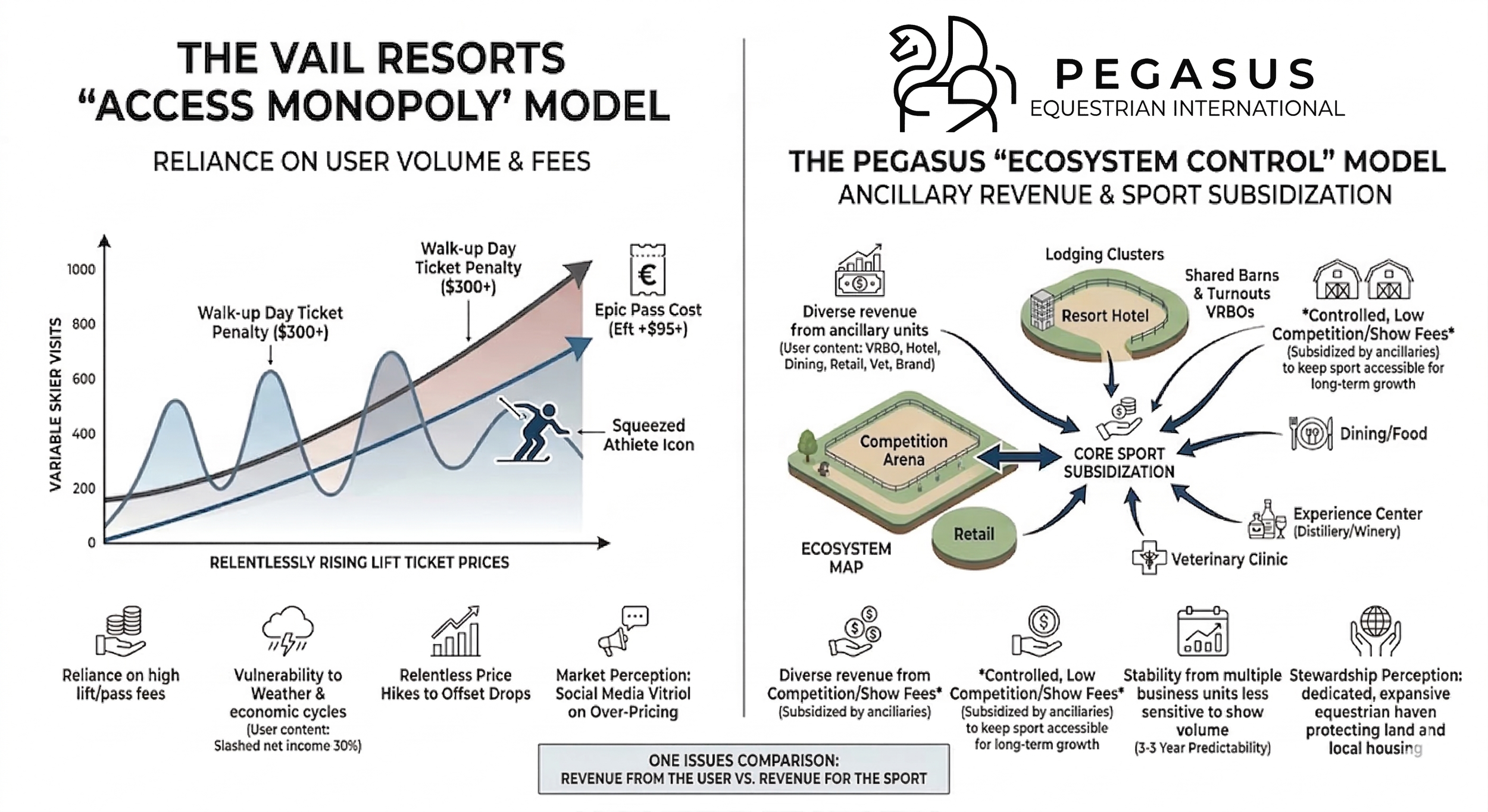
To truly understand the brilliance of the Pegasus model, one must look outside the equestrian world to the ski industry—specifically, Vail Resorts.
Vail operates on a model that treats the sport itself as the primary profit engine. A look at their most recent fiscal Q2 2026 earnings report (released March 9, 2026) reveals a glaring vulnerability. Vail missed revenue expectations ($1.08 billion actual vs. $1.12 billion expected) and slashed their fiscal 2026 net income outlook by roughly 30% down to $144M–$190M. The culprit? Historically poor weather and a 12% drop in skier visits.
So, how does Vail stay afloat when visits plummet? By relentlessly jacking up the price of access.
Despite a 12% drop in volume, their lift revenue only declined ~3%. Why? Because they continuously hike the prices of their Epic Pass and punish non-pass holders with walk-up day tickets approaching an astronomical $300 a day.
Social media platforms like Reddit are currently flooded with vitriol aimed at Vail's pricing structure. Skiers lament $30 hamburgers, overcrowded slopes (because pass-holders over-ski to "get their money's worth"), and the utter corporatization of the mountain. Even Vail's CEO has publicly acknowledged that making individual lift tickets painfully expensive is an intentional strategy to force guests into buying advanced passes.
The Pegasus Contrast: Vail is forced to squeeze its athletes because it relies on the activity for its core margins. Pegasus, by contrast, owns the entire surrounding ecosystem. Because the resort retains the land, the VRBOs, the hotel, the dining, and the retail, it doesn't need to bleed equestrians dry on competition and show fees.
By capturing the massive margins on hospitality and retail (the "bed and the beer"), Pegasus can afford to suppress the rising costs of the core sport (the "bridle"). By keeping competition entry fees reasonable, Pegasus protects the accessibility of the sport, making more money, and ensuring long-term growth rather than suffocating it behind a paywall
6. The "Keep and Rent" Paradigm
A critical requirement of Oregon's Destination Resort approval is that Pegasus must provide a minimum of 150 rooms for visitor-oriented lodging. By building clusters of short-term equestrian rentals (VRBOs) featuring shared central barns, stalls, and practice arenas, Pegasus accommodates riders who stay for 2 weeks to 2 months. This captures the tourism revenue while perfectly fulfilling the resort mandate without permanently alienating the land.
7. Financial Proof of Concept: The 10-Unit VRBO Cluster
The following analysis verifies the profitability of building the first 10 VRBO homes as on-site rentals rather than selling them as individual lots.
Controlling the Capital Investment (CAPEX)
We project an even $500,000 all-in cost per unit to build on site. This yields an average 1,400-square-foot home with 2 to 3 bedrooms.
No SDCs: Having pre-approval and private infrastructure means a complete absence of municipal System Development Charges (SDCs), which routinely slap developers with $10,000+ per door in other jurisdictions.
No Garages: Because these are short-term rentals, we do not need to build residential garages, saving roughly $40,000 per unit. (If guests require indoor vehicle storage, we can simply charge a premium for it elsewhere on-site).
Infrastructure Synergy: This $500,000 figure does not need to factor in roads or master utilities, as those are already being built to service the resort at large.
Annual Operating Performance & Target ROI (10 Units)
Total Base Investment: $5,000,000 (10 units @ $500k).
Daily Rate: $1,500/day.
Occupancy Assumption: 50% occupancy (182.5 days per year).
Gross Annual Revenue: $2,737,500.
Total Operating Costs: $730,000 ($200/day per unit).
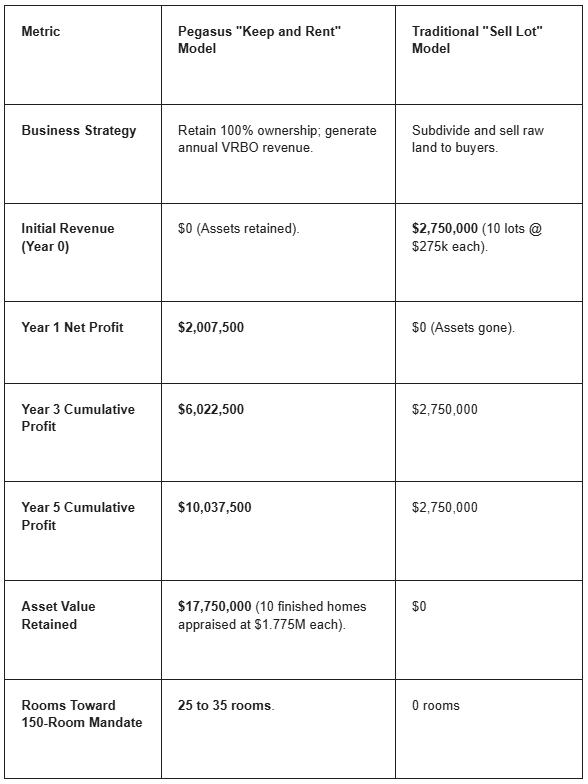
Yearly Net Profit: $2,007,500.
Annual Return on Investment (ROI): ~40.15% current return on the $5M build cost.
Breakeven Point: ~30 months (2.5 years).
By utilizing fold-away beds, these 10 homes will average 2.5 to 3.5 bedrooms each, yielding up to 35 rooms toward the 150-room destination resort minimum.
Direct Comparison: Pegasus VRBO Model vs. Lot Sales (10 Units)
To illustrate why retaining these units is vastly superior to the conventional equestrian development model, the table below compares the Pegasus "Keep and Rent" strategy against a traditional lot-sale strategy (assuming a recent appraised land cost of $275,000 per lot).
8. Strategic Scaling and Infinite Open Space Compliance
The greatest advantage of the equestrian event industry is its extreme predictability: major competitions and circuits are booked 3 to 5 years in advance. This gives Pegasus an incredible strategic edge. We know exactly what lodging, dining, and venue capacity we will need years before we need it, allowing us to safely scale capital expenditures and revenue expansion without the weather-dependent guesswork that plagues companies like Vail Resorts.
As demand dictates, we currently have the designated land to easily scale this rental engine up to 100 VRBO units. However, it is vital to note that 100 units is a minimum baseline, not a maximum. Pegasus has no cap on the number of VRBOs it can build under its approval, subject only to the requirement that 50% of the land remains dedicated to open space. Because equestrian amenities—like the 40 acres of polo fields, the flat track, the arenas, and the 224-acre cross-country, separate steeplechase and driving courses—are legally classified as open space, Pegasus has the regulatory runway to expand its VRBO footprint almost indefinitely.
Conclusion
The Pegasus Equestrian Resort business model is financially superior, ecologically sound, and socially responsible. By rejecting the traditional lot-sale model failing in Wellington and Ocala, Pegasus reduces the gentrification and land fragmentation that inevitably pushes equestrians and local residents out.
By taking a page out of the hospitality playbook and improving upon it—controlling the ancillary revenue rather than gouging the athletes like Vail Resorts—Pegasus ensures the core sport remains accessible and thriving. Armed with a 3-to-5-year advance booking horizon, Pegasus scales predictably. It brings massive economic revitalization to Douglas County while protecting local housing, permanently preserves its agricultural land, gracefully satisfies its destination resort lodging requirements, and secures long-term agricultural equestrian use.
Oregon is not just an alternative for equestrian sports; it is the definitive future.
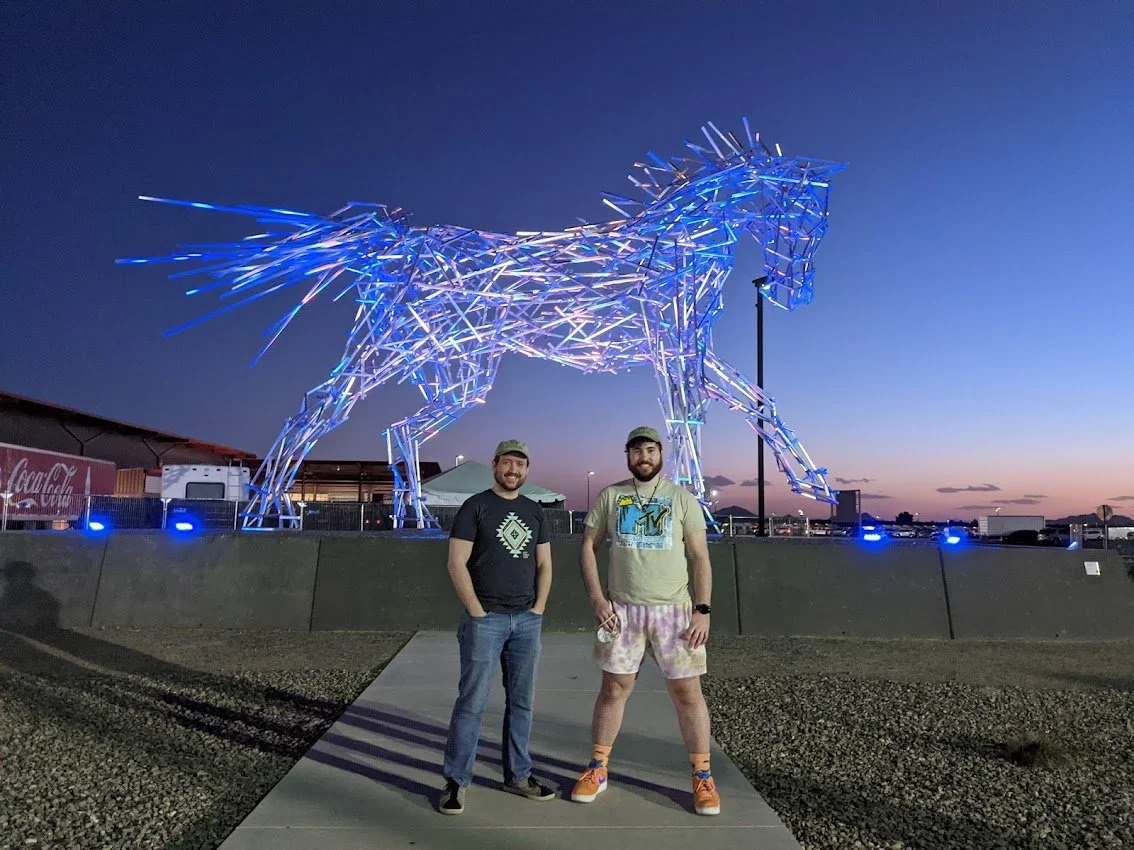
Drew Millegan and Quinn Millegan, Co-Founders of Pegasus Equestrian International.
The Main Arena Conceptual Design - the “Jewel” of Oregon
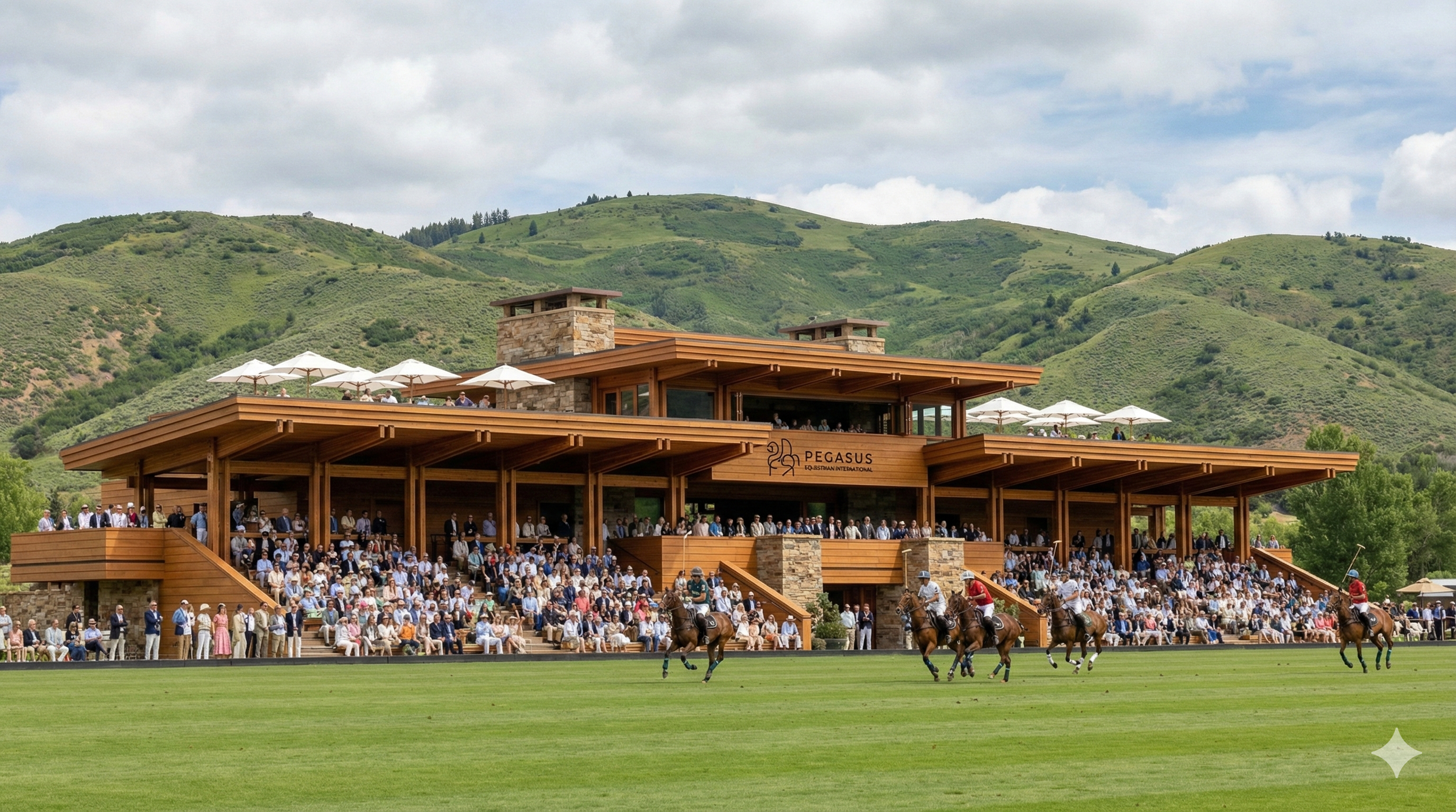
The Polo Grounds Conceptual Design
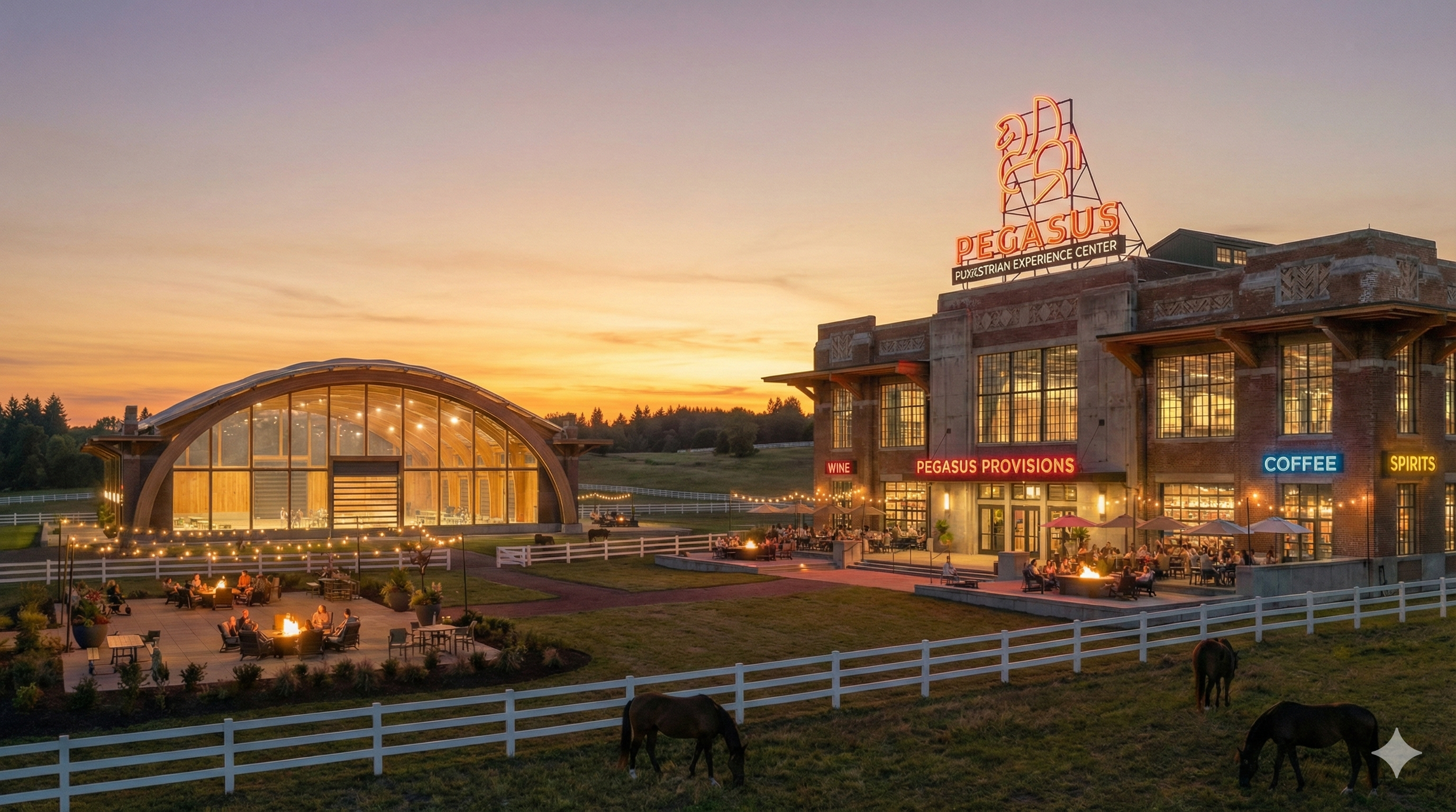
Pegasus Equestrian Experience Center Concept
The team at Pegasus Equestrian International Resort & Venue is excited for what is sure to be a “once-in-a-generation” project that will stand out for years to come.
Pegasus has limited opportunity for accredited investors in this early stage - but that window with preferential terms is short. Reach out today. Call, email, or inquire here.
We are developing what could be the number one show park in North America and a world class destination even if you do not ride in on a horse. We look forward to hosting you.
- Drew Millegan, Quinn Millegan, and the Pegasus Equestrian team
info@pegasuseq.com | (800) 651-1996
See more information below on our team and project:
Pegasus Equestrian Experience Center
Linda Royer: Lead Equine Designer
Mary Arnstad: Hotel & Resort Management Lead
Paul Cunningham: International Equine Adviser
David Gorman: Environmental & Ecological Engineer
Drew & Quinn Millegan: About the Founders
