
Stirling Downs: Where the Sport of Kings Gets a 21st-Century Upgrade
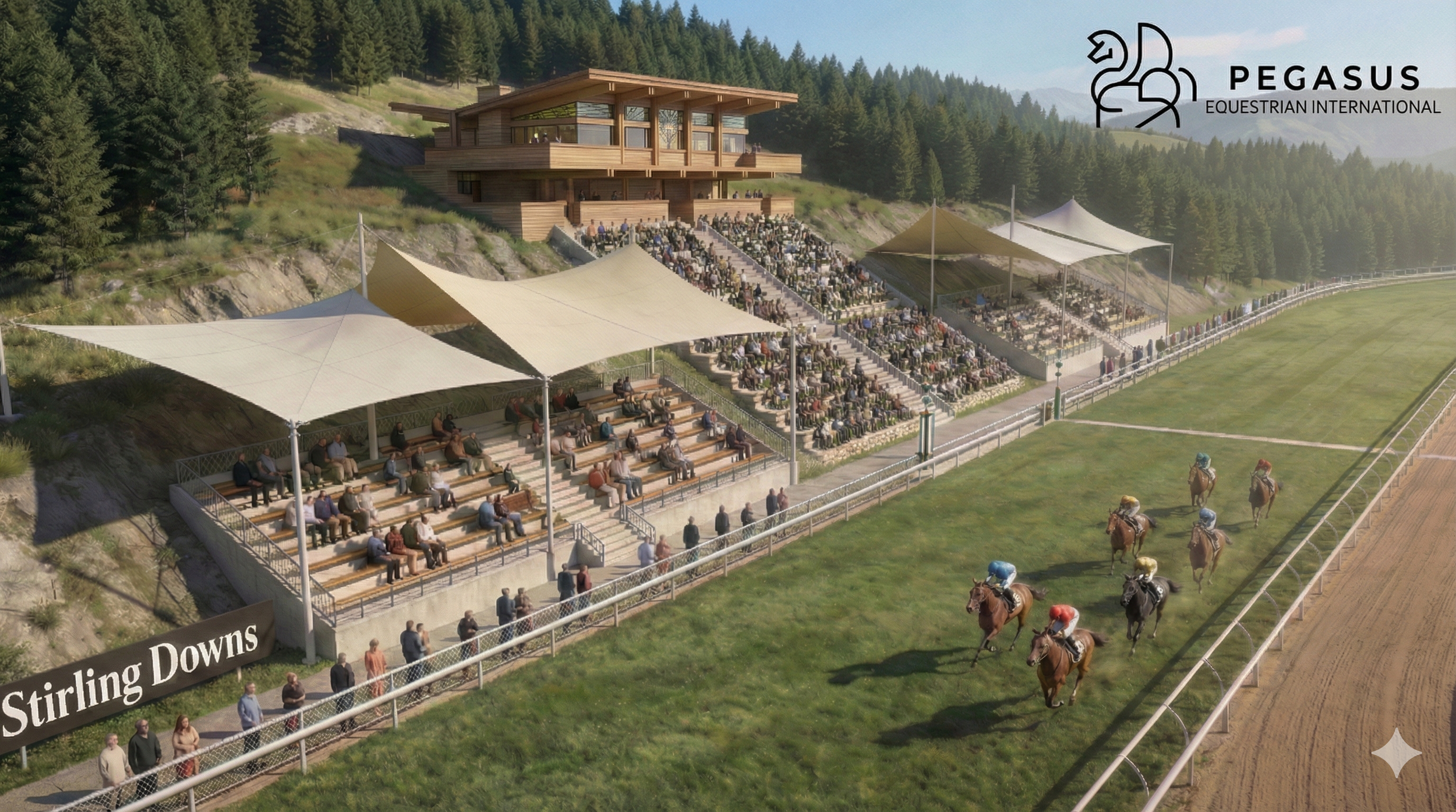
Stirling Downs Conceptual Design (Pegasus Equestrian / Gemini 2026)
Also posted on LinkedIn here.
Executive Summary: The Inconvenient Truth About Horse Racing
Here's a sobering reality: the "Sport of Kings" has been playing checkers while the world moved on to 4D chess. Over the past 50 years, thoroughbred racing has shed nearly 60% of its inflation-adjusted market value. Fifty-four racetracks have closed since 2000. Foal production has collapsed by 49%. And despite billions in subsidies, the industry continues its death spiral—December 2025 saw wagering handle plummet 7.3%, the worst month on record.
But here's the plot twist: this collapse isn't a tragedy. It's an opportunity.
The old model—spectator-dependent, subsidy-reliant, single-discipline—is functionally obsolete. What's emerging in its place is something altogether different: integrated, multi-discipline equestrian resorts positioned on national transportation corridors, fueled by digital-first wagering platforms growing 8-11% annually.
Pegasus Equestrian International isn't trying to save horse racing. It's transcending it.
Built around a deceptively simple idea—that equestrian sports deserve a world-class destination—Pegasus spans 3,000 acres and will lure competitors and spectators from across Oregon, the nation, and beyond. This isn't just another venue. It's the destination. Located strategically on Interstate 5 with its own direct interchange and uninterrupted sightlines (and yes, its own 5,100-foot runway), Pegasus serves as the statewide, national, and international home for equestrian excellence. The master plan includes five climate-controlled indoor arenas, sprawling outdoor grass and sand arenas, a dedicated combined driving course, cross-country grounds, four full-size grass polo fields, flat track, steeplechase, and—as if that weren't enough—a resort and spa. But the horses? They come first.
Part One: The Structural Collapse (And Why That's Actually Good News)
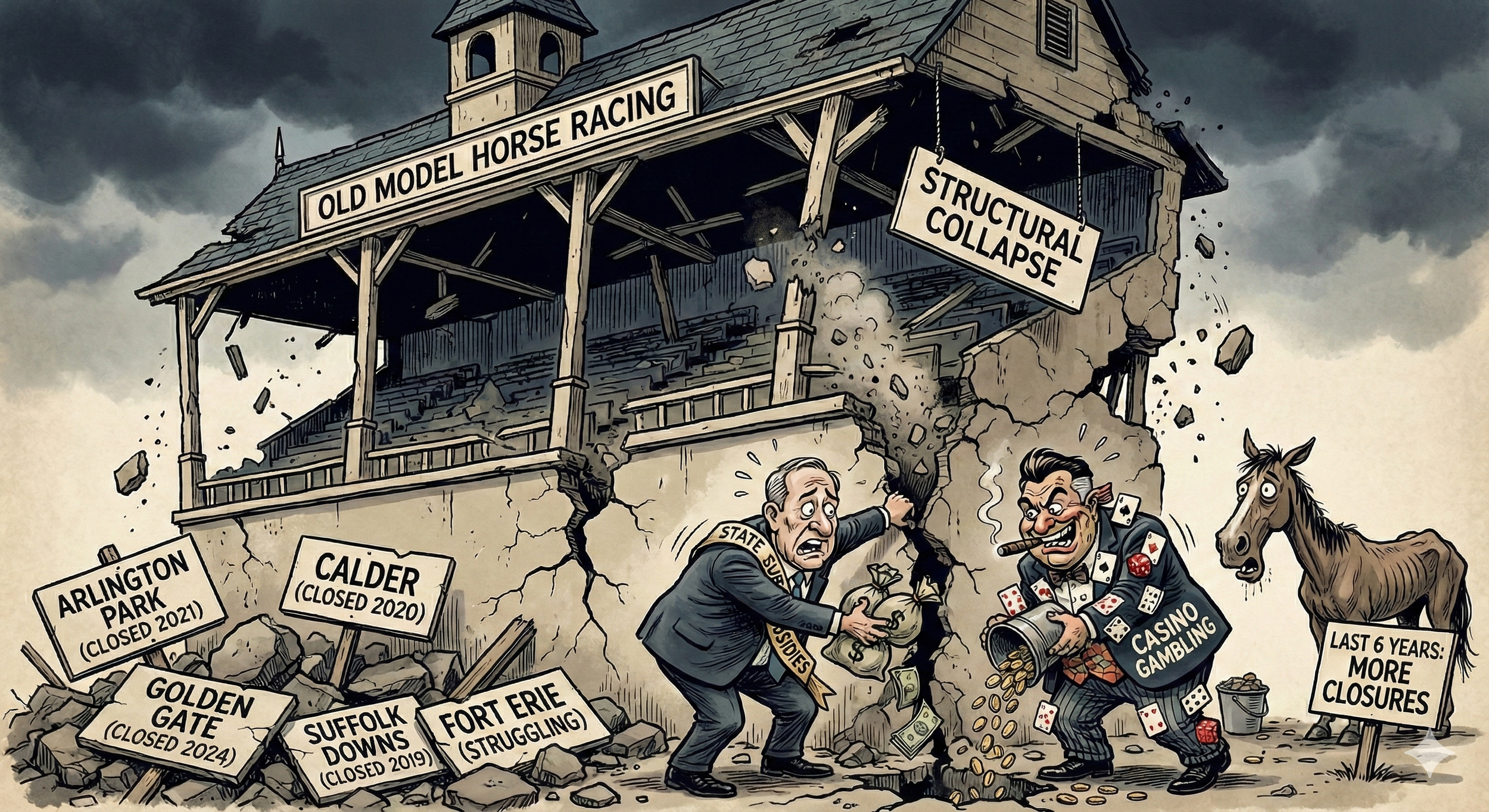
(Pegasus Equestrian / Gemini 2026)
The Numbers Don't Lie
The equestrian establishment has been living in a carefully constructed fantasy. Consider the evidence:
Wagering Handle (The Definitive Metric)
1992-2003: $14-15 billion annually (the stable era)
2025: $11 billion annually (-27.3% nominal, -57% inflation-adjusted over 22 years)
December 2025: -7.3% monthly (accelerating, not cyclical)
Translation: The industry has lost nearly 60% of its real purchasing power in a generation. This isn't a temporary downturn. This is structural collapse.
Institutional Death Spiral
Since 2000, 50 permanent track closures have occurred—and they're accelerating. The most brutal statistics: Arlington Park (94 years), Golden Gate Fields (83 years), Freehold Raceway (171 years—the oldest continuously operating track in the United States), and Pimlico Race Course (home of the Preakness) are all now abandoned.
Critical observation: These closures are happening despite continued state subsidies. The problem isn't financing. It's model obsolescence.
The Supply Chain Is Permanently Damaged
Thoroughbred foal production tells the real story:
1992: 35,051 foals produced (peak)
2024: 17,700 foals produced (-49% decline)
Within 3-5 years, this destruction of the breeding pipeline will trigger what industry insiders call a "death spiral"—insufficient quality horses leading to deteriorating race quality, which drives away remaining spectators and further collapses wagering. There's no coming back from this.
The Spectator Base Has Abandoned Ship
Annual attendance is down 30% since 2000. The median racegoer is 60+ and getting older. Current daily attendance averages 3,200 per race day. This isn't a demographic shift—it's a values shift. Horse racing, rightly or wrongly, has been culturally repositioned from "prestige entertainment" to "outdated relic."
Why the Industry Failed to Adapt
The question worth asking: How did an industry with 15 years to innovate manage to do nothing? (loosely the period when digital wagering and online streaming began to materially reshaping other sports)
The answer reveals six structural failures:
Subsidies Masked the Rot — Casino revenue-sharing and state appropriations created a false comfort that eliminated any urgency to innovate. Why modernize when you're getting government checks?
Leadership Was Too Comfortable — The industry is controlled by multi-generational breeders, owners, and executives (average age early 60’s) who built their fortunes in the old model. They had zero incentive to cannibalize their own business.
The Industry Was Fragmented — Horse racing lacks any unified strategy. Tracks compete with each other instead of collaborating. There's no equivalent to an NFL Commissioner with the authority and mandate to force modernization.
Digital Innovation Never Happened — While F1(Formula 1) embraced Netflix, UFC built a digital empire, and esports went full Gen-Z, horse racing remained stuck in the 1980s. Minimal social media, late-to-market mobile betting, poor production quality. The demographic that could have saved the sport? They never got the message.
Regulatory Capture Protected Incumbents — Federal and state policies locked legacy investors in place with depreciation schedules and tax incentives that made maintaining the status quo more profitable than innovating.
Animal Welfare Became a Crisis — Legitimate concerns about horse fatalities and safety standards (Santa Anita 2019 and ongoing incidents) eroded the public image. The industry's weak response to these concerns accelerated legislative threats, particularly in states like California and New York.
The industry is only now responding with the Horseracing Integrity and Safety Authority (HISA)—a private regulatory body established by Congress to enforce uniform safety and health standards for thoroughbred racing. It's a start. It needs to expand to quarterhorse racing and the entire equestrian industry.
The Fundamental Truth: The old model failed because its leaders refused to change. The window for incremental reform has closed.
Part Two: The New Model Emerging (Digital Transformation)
Where the Money Actually Is
Here's the critical insight that changes everything: The horse racing market is transforming from spectator-dependent to digital-first. This isn't opinion. This is validated market data.
Current State (2025-2026):
Online wagering: $7.15-8.25 billion annually (65-75% of total)
Growth rate: 8.74-11.4% CAGR through 2029
In-person wagering: $2.75-3.85 billion annually (declining 2-3% annually)
By 2027-2028:
Online will represent 80%+ of total wagering
In-person spectators become optional, not essential
Why This Changes Everything for Pegasus
The traditional racetrack model requires 10,000-15,000 seat capacity to generate viable economics from gate revenue and ancillary sales. Online wagering demolishes this requirement.
The fundamental implication: Pegasus can operate successfully with 3,000-5,000 seats because online wagering generates economics independently. This transforms:
Venue economics — Lower capacity requirement means lower capital investment
Content model — Broadcasting quality becomes the competitive advantage (not the spectator experience)
Capital efficiency — Dramatically lower initial investment ($15-30M vs. $50-100M)
Revenue diversification — Multi-discipline events create content diversity for platforms
Major Capital Is Already Moving
The platform landscape proves this isn't speculation. In 2025-2026, major institutional players are entering or expanding in horse racing:
DraftKings (sports betting leader): Explicitly expanding into horse racing
FanDuel (Flutter subsidiary): Testing horse racing integration
TwinSpires: Mature platform, growing volume
TVG: Full-service platform operational
NYRA Bets: Expanded nationally
Amwager: Advanced wagering specialist growing
These companies represent hundreds of billions in market capitalization. They don't move capital into horse racing unless the market fundamentals validate growth opportunity.
Part Three: The Broader Equestrian Market ($177 Billion Opportunity)
Horse racing isn't the opportunity. It's a fraction of the opportunity.
The U.S. equestrian market is $177 billion annually and growing 3-4% per year. Horse racing represents only $11 billion of this—and it's declining. Meanwhile, other disciplines are growing:
Show jumping: Growing
Eventing (including dressage): Growing
Therapeutic riding: 5% CAGR (mental health applications exp)
Equestrian tourism: $10B+ market, growing
Equine health technology: Nascent but expanding rapidly
The strategic insight: Single-discipline racing-only venues are declining or stagnant. Multi-discipline integrated venues are stable or growing.
International precedent validates this: Aachen, Germany (world equestrian benchmark) operates on 140 acres with 350,000+ annual visitors and €40-50M annual revenue, entirely self-sustaining without subsidies. Pegasus has 2,800 acres (20x larger), positioned on the I-5 corridor with 30M+ addressable population, and access to a U.S. equestrian market 177x larger than F1's total sports market.
Part Four: The Pegasus Model—Five Elements That Work
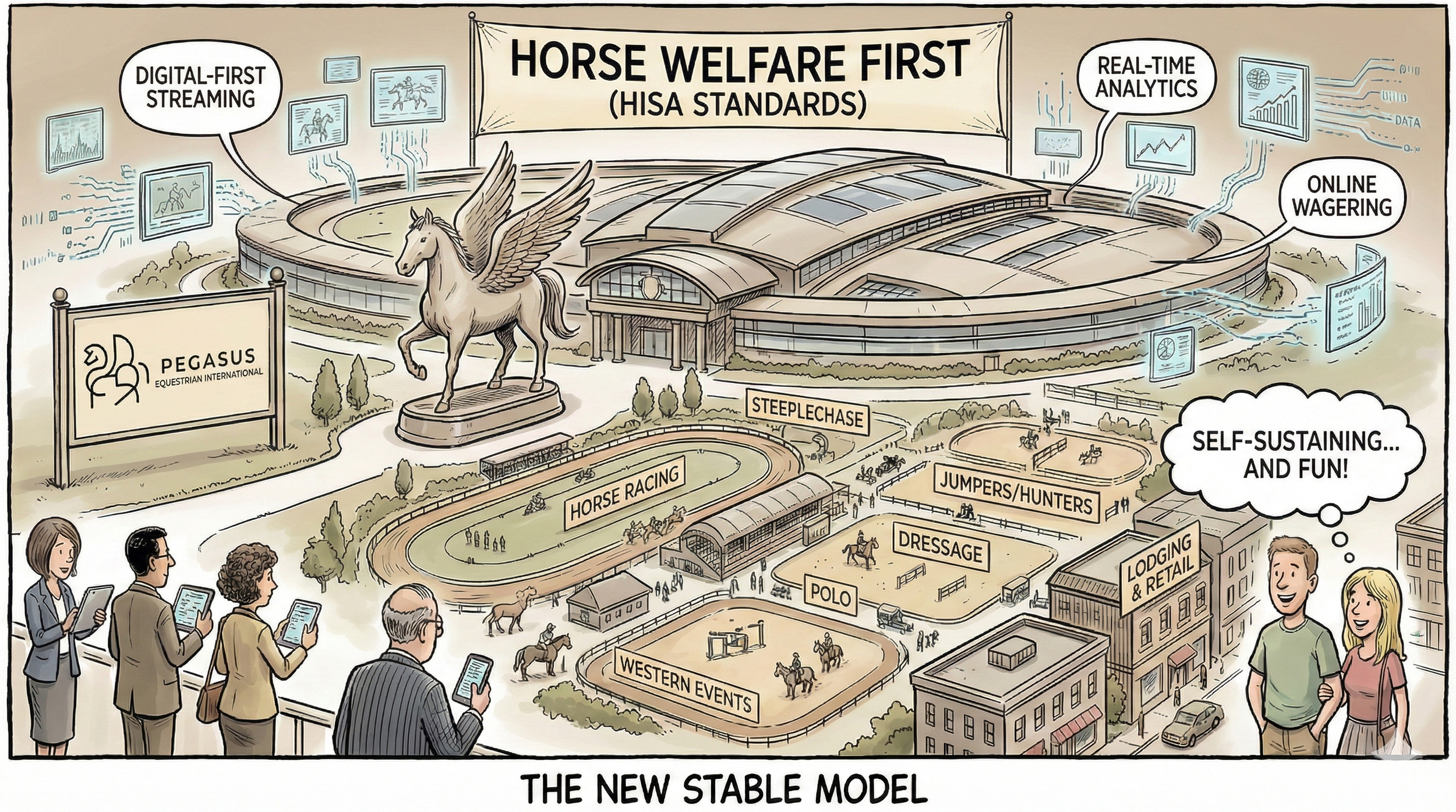
(Pegasus Equestrian / Gemini 2026)
1. Multi-Discipline Integration (Not Racing-Only)
Pegasus integrates:
Flat racing and steeplechase
Show jumping and hunters
Eventing (including international 5-star)
Dressage
Driving
Competitive trail riding
Polo, barrel racing, western events, and more
All on more than 2,800 acres
Revenue implication: Racing becomes 15-20% of revenue at maturity; other disciplines generate 80-85%. This creates regulatory protection (multi-discipline venues are immune to single-discipline bans) and revenue resilience.
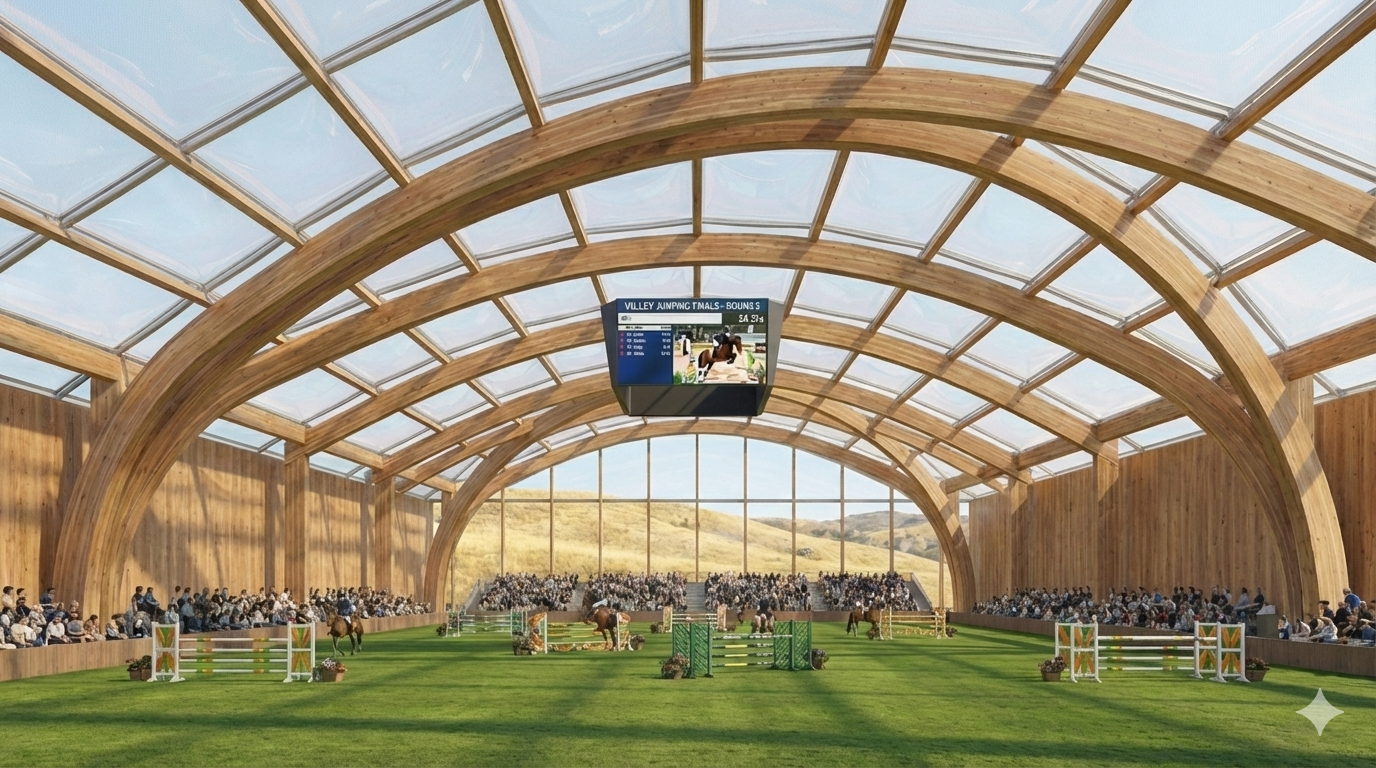
The Jewel Covered 3 acre Area Concept (Pegasus Equestrian / Gemini 2026)
Critical Advantage: The Only Comprehensive Thoroughbred Retirement & Retraining Hub
Here's an under-the-radar opportunity that validates the entire Pegasus model: thoroughbred aftercare and second-career placement. Annually, 8,000-10,000 racehorses exit U.S. racing. The Retired Racehorse Project, Thoroughbred Aftercare Alliance, and organizations like New Vocations have successfully transitioned over 20,000 horses into second careers—but the aftercare ecosystem is fragmented across the country.
Pegasus changes this. It's the world's only integrated venue offering complete infrastructure for thoroughbred retirement in one location:
Full-service rehabilitation — Veterinary clinic, turnout, reconditioning
Multi-discipline retraining — Specialists in hunters, jumpers, eventers, dressage, steeplechase, polo, driving, western, competitive trail riding and anything equestrian
Continuous placement pipeline — Horses transition directly into competitive events generating sponsor interest, rider demand, and adoption visibility
Sustainable economics — Retraining generates year-round revenue (boarding, training, facility rental) independent of racing
The sector faces a critical problem: 84.8% of equestrians perceive off-track thoroughbreds negatively due to lack of professional retraining options. Pegasus flips this by becoming the retraining destination of choice. Every horse successfully transitioned to show jumping, eventing, or dressage is a competitive entry, spectator draw, and proof-of-concept. At modest volumes (500 horses annually), thoroughbred retraining alone generates ~$20M in direct revenue plus multiplier effects from events showcasing successful OTTB transformations.
2. Digital-First Positioning (Not Spectator-Dependent)
State-of-the-art broadcasting infrastructure becomes the competitive advantage:
Professional multi-angle, real-time analytics
Streaming platform integration
Content for digital distribution
Influencer partnership opportunities
This positioning means success with 3,000-5,000 seats becomes viable because online wagering compensates.
3. National Corridor Positioning (Not Urban Real Estate)
Pegasus is strategically positioned on Interstate 5—the main north-south transportation corridor on the West Coast—with direct interstate interchange and 2.5 miles of I-5 frontage. This provides:
30M+ addressable market of passerby's along the site's I-5 frontage
80M+ within a 3 hour flight of Eugene & 40M+ within an 8 hour drive
Regional/Natonal/International events draw vs. single-city venue (like Aachen's model internationally)
Tourism destination positioning capability
It’s own private FAA airport with a 5,100 foot runway
Land use approvals
No local opposition risk
No competition for land use
The Equestrian Experience Center Advantage: A major educational facility at the I-5 interchange serves 30M+ annual passers-by. This transparent, visible approach counters industry opposition through public education, documented thoroughbred success stories, and visible proof of modernization. Unlike hidden racetracks (defensive), Pegasus builds public trust through visibility.
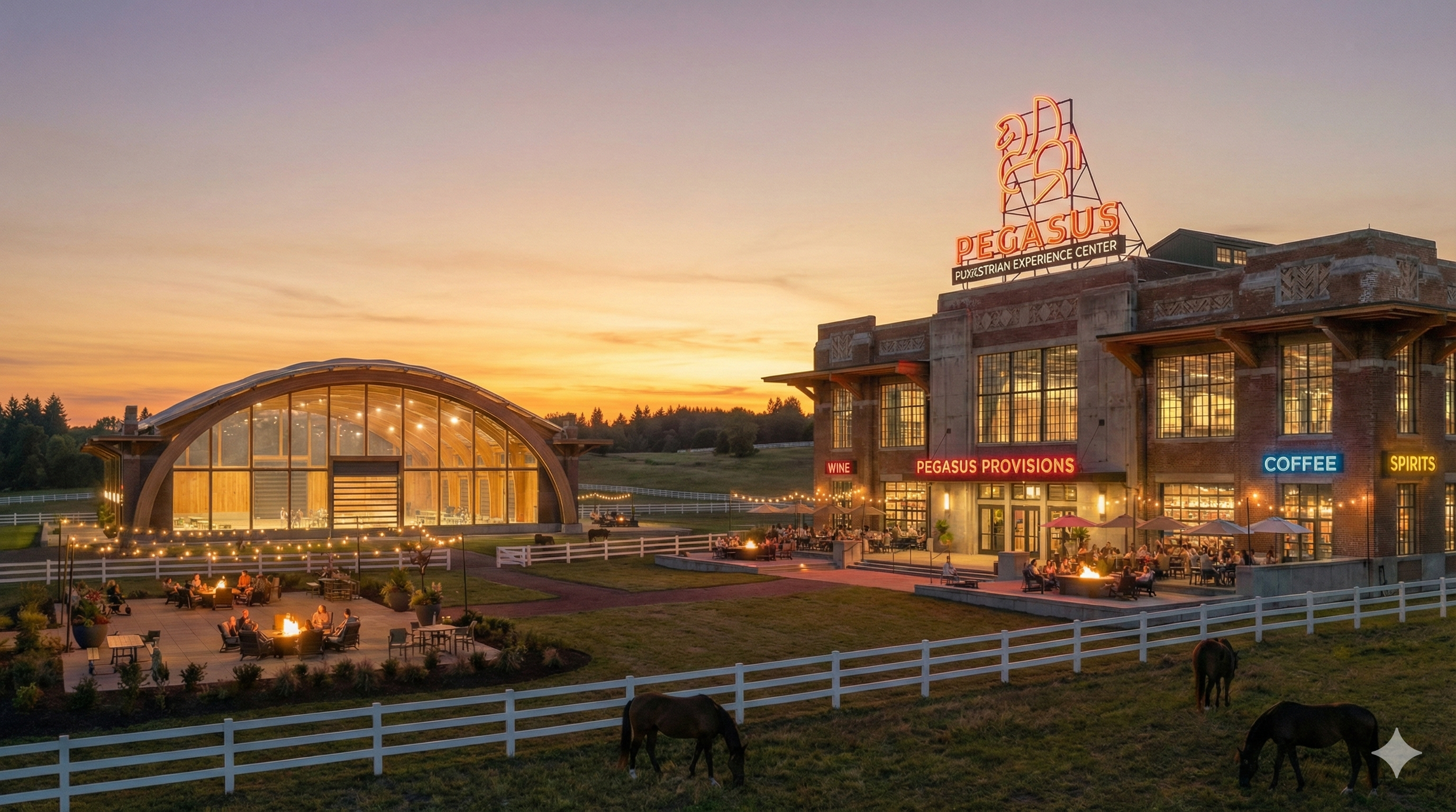
Pegasus International Equestrian Experience Center & Arena Concept (Gemini / Pegasus Equestrian 2026)
4. Self-Sustaining Economics (Validated by Real Market Data)
Independent economic analysis validates the revenue potential of integrated equestrian resorts. The Johnson Economics Pegasus analysis (2021) projects:
Equestrian Events & Hospitality (excluding racing/pari-mutuel):
Resort hotel: $22.58M annually
Vacation rentals: $26.69M annually
Event-based spending (stabling, training, food, services): $56.51M+ annually from equestrian competitions alone
Subtotal: ~$105M+ annually from existing equestrian disciplines
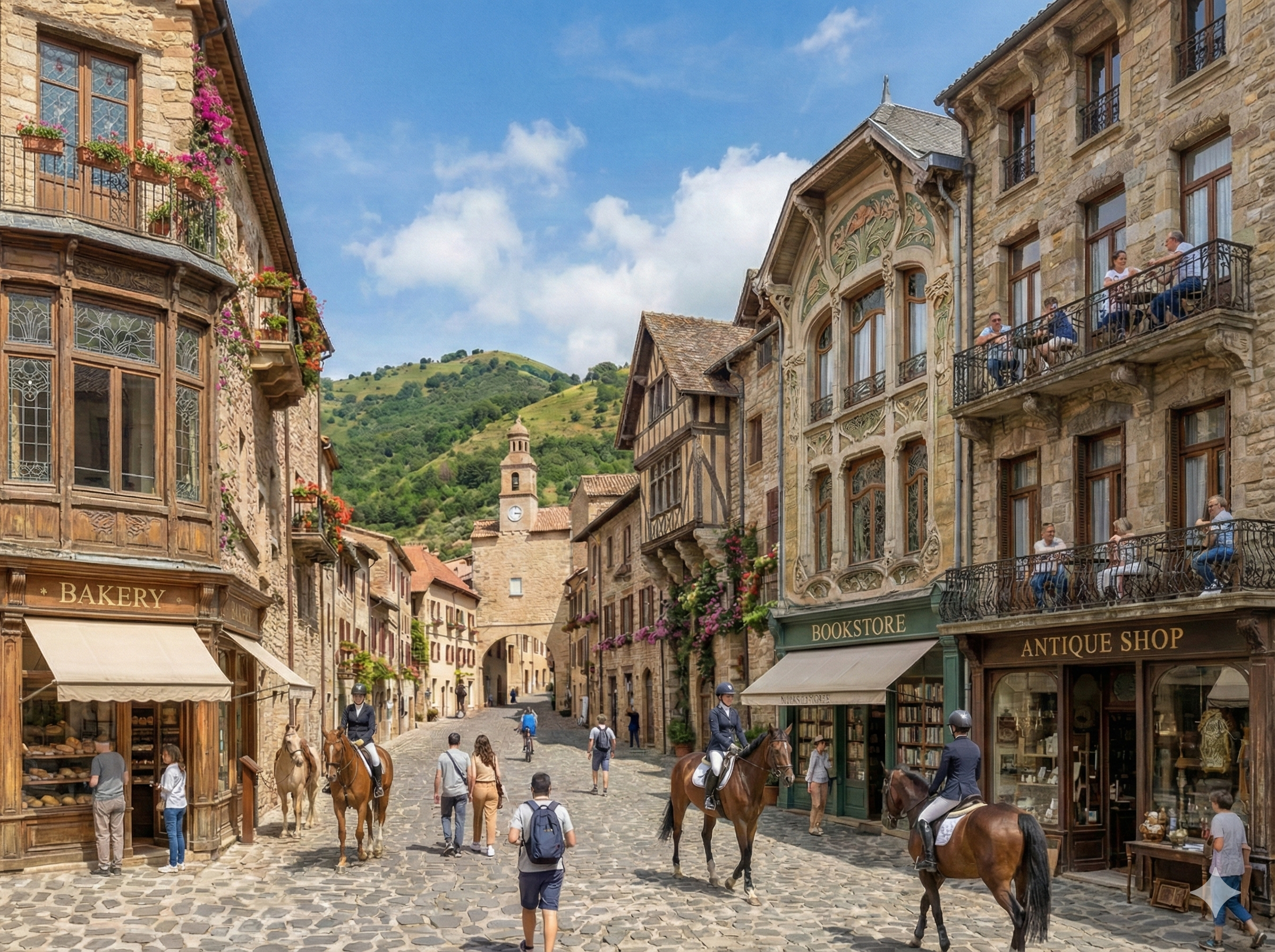
The Village of Stirling on 250+ acres with lodging, food, entertainment, employee housing, and retail (Pegasus Equestrian / Gemini 2026)
Market Validation—Winter Equestrian Festival 2025 study: A single 12-week equestrian event generated:
450+ non-resident participants: $448.2M in regional GDP impact
Direct horse-related expenditures: $338.6M (with $133.2M in indirect multiplier effects)
Tourist expenditures: $109.6M
262 non-resident spectators: $88M additional GDP impact
Created 4,188 jobs across the regional economy
The Critical Point: Racing and pari-mutuel wagering are additive to these established revenue streams, not the foundation. The broader $177B U.S. equestrian market operates profitably without racing. Pegasus captures this growth market first, then layers in racing as incremental revenue with zero government subsidies.
5. Solving the Industry's Authenticity Crisis (And Why That Matters)
The Problem: You may have heard that Netflix's "Drive to Survive" transformed Formula 1 from a dying sport into a global phenomenon. Why hasn't similar storytelling worked for equestrian sports?
The answer isn't production quality. It's structural authenticity.
Why F1 Storytelling Works:
Single protagonist (the driver)
Complete narrative arc: ambition → struggle → redemption
Ethical issues are technical (safety innovations) not moral crises
Unified governance (prevents "old boys' club" narratives)
Market valuation grew $1B → $2.4B (2010-2023)
Why Equestrian Entertainment Failed:
Netflix "Polo" → Limited traction
Hallmark "Kentucky Roses" → Romance drama, not sports transformation
Dual athletes (rider + horse) → Every story ends with a welfare question: "What happens to the horse?"
Industry crisis dominates headlines: Mike Repole's national lawsuit (Jan 2026) alleges antitrust violations, governance failure, aftercare collapse
Cannot sell triumph narrative when underlying system appears to harm the co-athlete
The Pegasus Solution: Rather than trying to storytell away the problem, Pegasus solves it structurally:
Welfare commitment demonstrated operationally (not rhetorically)
Transparent governance ( no conflicts of interest)
Visible institutional credibility (I-5 public education center)
Documented success (thoroughbred transitions to multiple disciplines)
With institutional authenticity established, storytelling becomes viable. The narrative becomes: "Industry transforms, horses thrive, riders ascend." This is compelling because it's true.
Part Five: Pegasus as Bridge in Industry Reform
The Current Crisis (January 2026):
Mike Repole (billionaire owner) has filed a national antitrust lawsuit against the Jockey Club, alleging monopolistic control, governance failure, and inadequate aftercare despite 4+ years of reform attempts. The Jockey Club denies the charges, calling his campaign "inflammatory" and "baseless."
What Both Sides Agree On: The industry needs fundamental change. They disagree on whether it can happen through cooperation or requires litigation.
How Pegasus Bridges This:
Rather than taking sides, Pegasus demonstrates that both reform agendas can be achieved simultaneously:
For Repole (Industry Reformers):
Aftercare excellence (directly addresses his core complaint)
Modern transparent governance (no "old boys' club" conflicts)
Self-sustaining economics (independent of subsidies)
Horse-first structural alignment (not rhetorical commitment)
For the Jockey Club (Industry Traditionalists):
Racing preservation (integrated facility requires racing component)
Breeding opportunity (2,800 acres enables closed-loop: breeding → racing → retraining)
Professional standards (HISA compliance + 39-acre veterinary clinic)
Industry continuity (proves modernization without litigation destroying system)
Strategic Value: Success answers the lawsuit's legal questions better than the discovery process. Both parties can claim victory: "See? Industry transforms, horses protected, racing thrives."
Conclusion: The Opportunity is now with Pegasus
The old horse racing model has collapsed—definitively, irreversibly, and accelerating. But this collapse creates an exceptional contrarian opportunity.
The transformation is structural. The opportunity is real. And Pegasus is uniquely positioned to lead it.
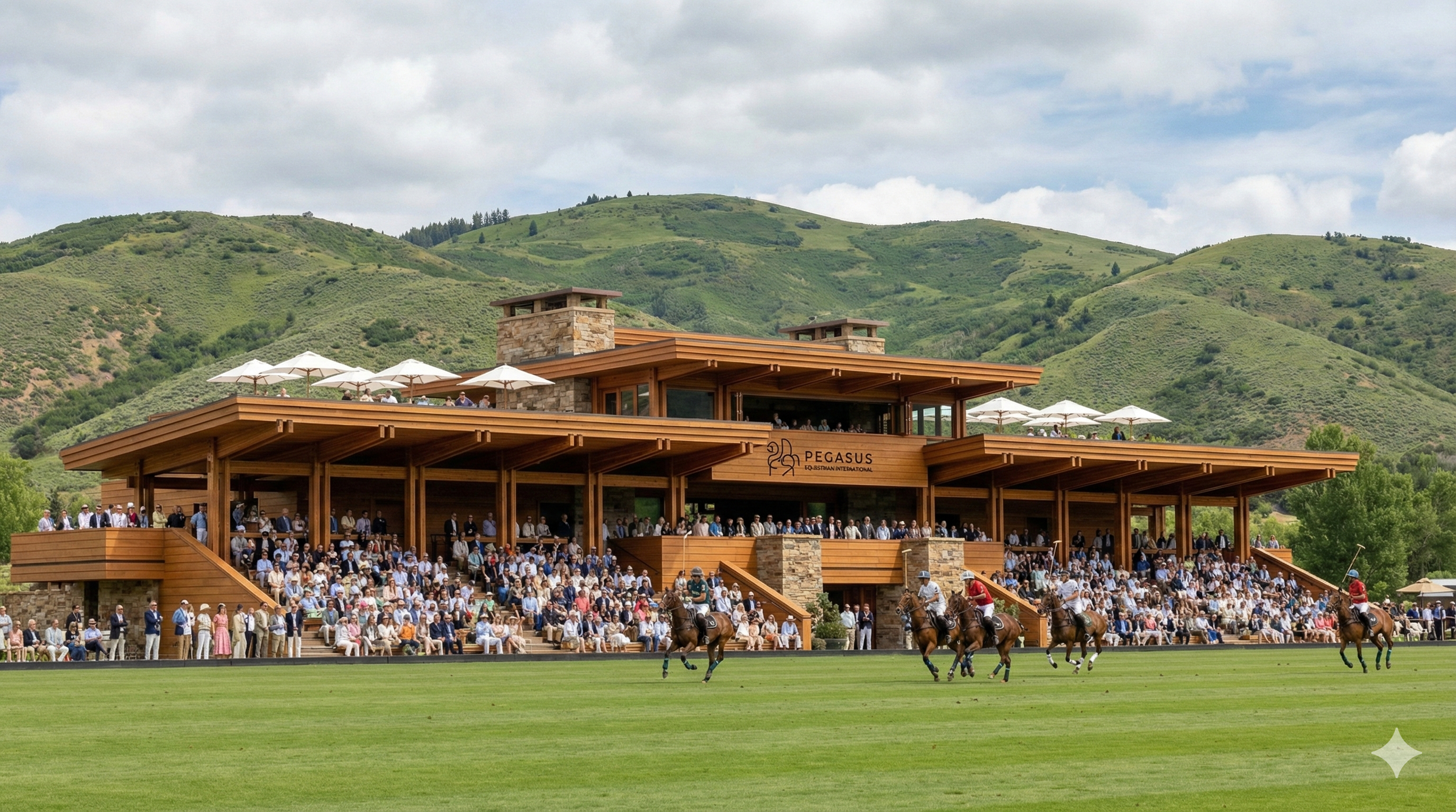
The Main Polo Field, one of four full size grass fields (Pegasus Equestrian / Gemini 2026)

The Hillside Resort Village Conceptual Design

The Main Arena Conceptual Design - Inspired by the Olympia in London

The Polo Grounds Conceptual Design
The team at Pegasus Equestrian International Resort & Venue is excited for what is sure to be a “once-in-a-generation” project that will stand out for years to come.
Pegasus has limited opportunity for accredited investors in this early stage - but that window is short and closing. Reach out today. Call, email, or inquire here.
We are developing what could be the number one show park in North America and a world class destination even if you do not ride in on a horse. We look forward to hosting you.
- Drew Millegan, Quinn Millegan, and the Pegasus Equestrian team
info@pegasuseq.com | (800) 651-1996
See more information below on our team and project:
Linda Royer: Lead Equine Designer
Mary Arnstad: Hotel & Resort Management Lead
Paul Cunningham: International Equine Adviser
David Gorman: Environmental & Ecological Engineer
Drew & Quinn Millegan: About the Founders
